
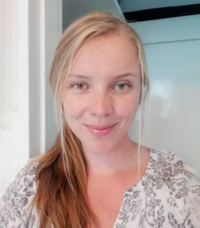
 Anna Booij is a Technical Programme Specialist at Clowns Without Borders South Africa supporting the quality implementation of the Parenting for Lifelong Health (PLH) programmes for young children and adolescents and the related PLH Digital interventions. After supporting partners in PLH capacity building, delivery, and monitoring and evaluation processes for several years, Anna now focuses on developing programme content and systems for effective implementation and roll-out in collaboration with PLH implementation and academic partners. Anna has a background in international development and humanitarian assistance, and builds on her research and operational experience in Liberia, South Sudan, Pakistan, Uganda, Kenya, Burundi, and South Africa.
 Dr Zuyi Fang is an Assistant Professor and Research Fellow at the Institute of Population Research, Peking University. She serves as a Disability Research Fellow with the Global Parenting Initiative (GPI) and leads the adaptation of Parenting for Lifelong Health (PLH) ParentText, a chatbot-based parenting intervention, within Chinese contexts.
Her research spans parenting interventions for children with and without disabilities, child protection, early childhood development, and family and child welfare.
 Ida Ferdinandi is the Programme Lead for Early Childhood Development at the UNICEF Country Office in Montenegro. Since joining UNICEF in 2009, she has played a pivotal role in supporting the Government of Montenegro in developing and implementing policies and reforms in areas such as deinstitutionalisation, child protection, parenting support, maternal and child health, nutrition, and early childhood intervention. She holds a BA in Social Anthropology from Simon Fraser University (Canada) and a Master’s degree in Social Sciences from the University of Freiburg (Germany) and the University of KwaZulu-Natal (South Africa).
 Dr. Betty Okot is a Postdoctoral Research Officer with the Global Parenting Initiative at Makerere University and an Early Career Researcher at the Child Health and Development Centre. She brings strong expertise in qualitative research and has a growing interest in multi- and transdisciplinary approaches. Betty was a key contributor to the Parenting for Respectability Cluster Randomised Controlled Trial, a major collaboration between Makerere, Oxford, and Glasgow universities focused on reducing violence against children and strengthening family relationships.
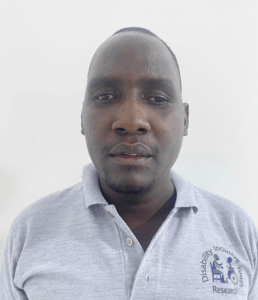 Charles Okello is a Disability-Inclusive Researcher, educator, and learning designer, enthusiastic about advancing equitable access to information, education, and technology. He works with the Child Health & Development Centre (CHDC) at Makerere University, focusing on disability-inclusive parenting. Charles is also a Mastercard Foundation Scholar pursuing a Master of Education in Learning Design and Technology at Arizona State University, where he integrates inclusive design, assistive technologies, and accessible digital learning systems into his practice.
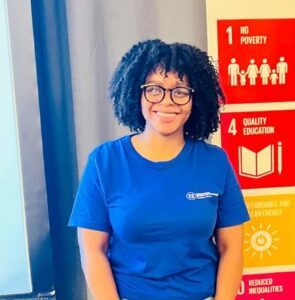 Awelani Mamburu is a Social Worker at Shonaquip Social Enterprise, specialising in disability inclusion, community training, and advocacy. She holds a Master’s degree in School Social Work focused on inclusive education, mental health, and educator support. Awelani has experience in child and elder protection, psychosocial services, and community-based initiatives. As Parent Network Lead, she oversees parent network activities and serves as a community facilitator and coordinator. She is also a researcher in school mental health and a strong advocate for disability rights, committed to fostering inclusive communities and meaningful change.
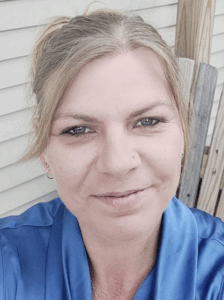 Elaine Passmoor is the National Executive Director of Down Syndrome South Africa (DSSA), a position she has held for the past 18 months. Her advocacy journey began nearly 18 years ago with the birth of her son, Joshua, who continues to inspire her work. Since 2010, she has been an active leader in the Down Syndrome movement, starting at the Down Syndrome Association Pretoria, where she contributed across management, programme development, and community support.