
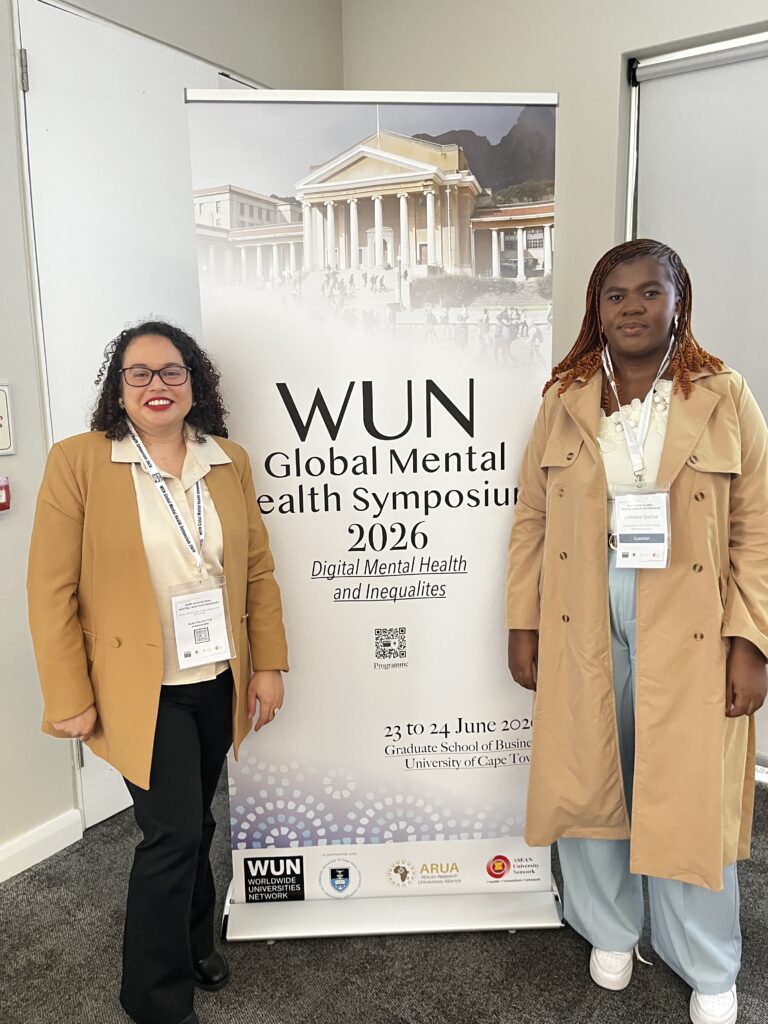
 The University of Cape Town recently hosted a Worldwide Universities Network (WUN) Mental Health Symposium (23 – 24 June). The symposium brought together researchers from across the Worldwide Universities Network to showcase innovative digital mental health tools and emerging research. Discussions highlighted the potential of digital solutions to expand access to mental health support while reinforcing the importance of grounding interventions in evidence, context, and user-centred design.
 Representing the SWIFT study, Likhona and Bronwen Pietersen contributed to discussions on the opportunities and challenges of digital mental health interventions through their presentation titled “The Potential and Pitfalls of a Digital Parenting Programme: The SWIFT Study.” The presentation highlighted key insights from the team’s pilot of a digital parenting programme, including lessons on implementation, adaptation, and continuous learning. A central theme of the presentation was the importance of flexibility when developing and implementing digital interventions.
The team reflected on the need to adapt approaches when evidence indicates that certain strategies are not working, underscoring the value of iterative learning in designing programmes that are effective, accessible, and responsive to users’ needs.
In addition to sharing the SWIFT study’s experiences, the event provided valuable opportunities to exchange ideas, reconnect with collaborators, and build new partnerships with researchers committed to advancing mental health and wellbeing through innovation.
The Global Parenting Initiative congratulates the SWIFT team on their continued efforts to strengthen parenting support through digital parenting interventions.